A Mercy to the Dying
We are thankful to the Lord that after much prayer, the attempt to introduce Assisted Dying was rejected by Parliament.
Before the vote The Church of England Continuing wrote to over 150 MPs as follows:
The Terminally Ill Adults (End of Life) Bill – Second Reading, Friday 11th September 2026.
Dear Member of Parliament,
As you prepare to debate and vote on the Second Reading of the Terminally Ill Adults (End of Life) Bill on 11th September, I write to you on behalf of the Church of England (Continuing) to urge you, in the strongest possible Scriptural and moral terms, to vote against this measure.
We recognise that many who support this legislation do so out of a desire to alleviate human suffering. True compassion cannot be divorced from the moral and spiritual laws established by Almighty God. As lawmakers, your duty under the Crown is exercised within a nation whose constitution, laws, and monarchy are historically rooted in the Holy Scriptures. We respectfully remind you that with his hand on the open Bible, His Majesty King Charles III at his coronation service in May 2023 took a solemn Oath and promised to the utmost of his power to ‘maintain the Laws of God’, ‘the true profession of the Gospel’, and ‘the Protestant Reformed Religion established by law’. This sacred duty devolves upon every Member of Parliament to take the Oath of Allegiance to the Crown, and the purpose of legislation should be to carry out this solemn undertaking. This surely implies an obligation on the part of the Crown-in-Parliament never to present any Bill for the Royal Assent that contravenes the Laws of God, since the two Oaths are inseparably bound up together. We therefore submit to you the foundational Scriptural principles that compel us to oppose state-sanctioned assisted suicide.
1.The Sanctity of Human Life and the Image of God
The Holy Scriptures reveal that human life is not a commodity to be discarded when it becomes fragile or burdensome. Genesis 1:27 declares that ‘God created man in his own image’. Because human beings bear the Imago Dei, life possesses an inherent, absolute dignity that cannot be quantified by physical capability or economic usefulness. To legalize the intentional termination of human life is to deface the image of God and devalue the sacred worth of every citizen.
2. The Sovereign Divine Prerogative over Life and Death.
The Holy Scriptures explicitly state that ultimate sovereignty over the entry into and departure from this life belongs to Almighty God the Creator of all things alone, for whose pleasure they are and were created. Because Almighty God is the author of human life, He alone possesses the sovereign right to determine its beginning and its end. Job 12:10 declares that ‘in whose hand is the soul of every living thing, and the breath of all mankind’, while Deuteronomy 32:39 declares ‘I kill and I make alive’. By establishing a statutory framework to determine the timing and manner of a person’s death, Parliament attempts to usurp a divine prerogative, crossing a boundary that no human authority has the right to cross.
3. The Divine Commandment against the taking of human life.
The Ten Commandments are absolute and uncompromising. The Sixth Commands: ‘Thou shalt not kill’ (Exodus 20:13). This forbids the sin of murder and the sin of self-murder as morally wrong. This moral law underpins the historic English common law tradition, which has always treated the protection of innocent life as paramount. State-sanctioned assistance in suicide violates this commandment. The law must remain a shield for the weak, not an instrument for their destruction.
4. The Christian duty to protect the vulnerable.
The Holy Scriptures consistently demand that society protect the weak, the elderly, and the infirm (Psalm 82:3-4). We are gravely concerned that legalizing assisted dying will inevitably introduce a subtle, yet devastating, cultural pressure upon the vulnerable. The sick and elderly will begin to perceive themselves as a financial or emotional burden to their families and the N.H.S. The Scriptural mandate is to ‘bear ye one another’s burdens, and so fulfil the law of Christ’ (Galatians 6:2), which requires us to surround the suffering with love and high-quality palliative care, reflecting Christ’s own ministry to the sick, rather than offering them a state sponsored exit from this world.
5. The purpose of suffering and hope.
Whilst we do not minimise the profound realities of physical pain, the Christian faith teaches that suffering is not devoid of meaning, nor is it the ultimate evil. It can be a time of deep spiritual reconciliation, family bonding, and turning to God. State-facilitated death deprives individuals of the opportunity for repentance and faith in their final days. As the book of Job teaches, we must trust God’s providence in adversity, knowing that our times are in His hands (Psalm 31:15).
Parliament has historically derived its moral compass from the Judeo-Christian heritage based on the Holy Scriptures that shaped the laws of this realm. To cross this Rubicon by legalising assisted dying would reject that heritage, devalue human life, and endanger the weak and vulnerable. The House of Commons occupies a position of immense solemnity and stewardship. We pray that you prayerfully consider these Scriptural truths and will be granted the wisdom and moral courage to uphold the sacred principle of human life, defend the most vulnerable in our society, and vote against the Terminally Ill Adults (End of Life) Bill on the 11th September.
We assure you of our prayers as you undertake your heavy responsibilities before Almighty God.
Yours faithfully and sincerely,
The Church of England (Continuing)

We are thankful to the Lord that after much prayer, the attempt to introduce Assisted Dying was rejected by Parliament.
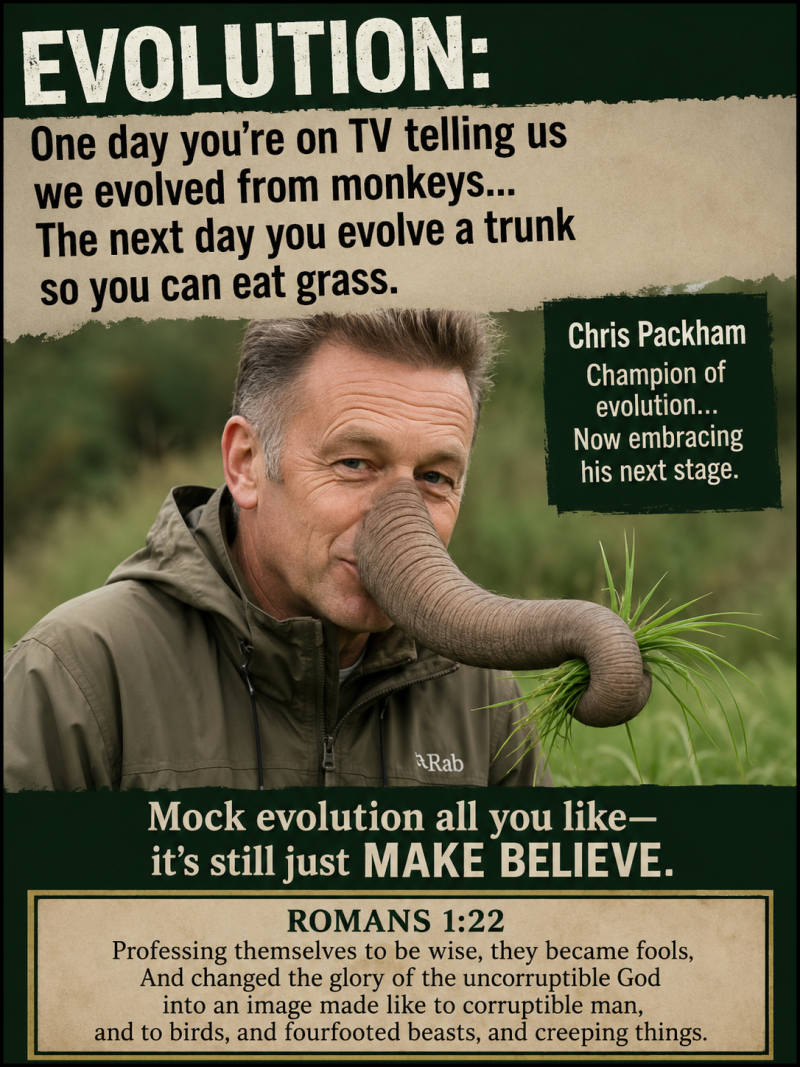
Evolution: 1 of 5, the Elephant

THE CHURCH OF ENGLAND (CONTINUING) WEBSITE STATEMENT JUNE 2026
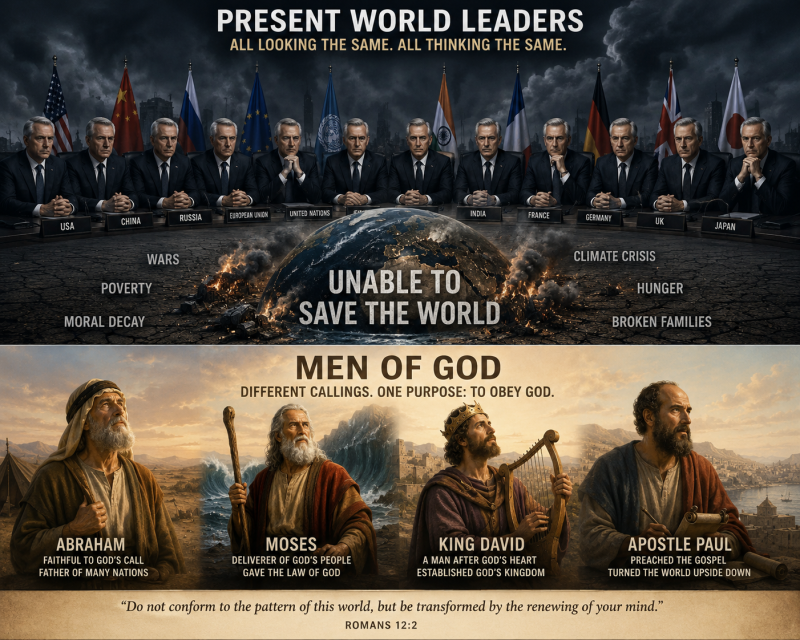
Looking Forward to the Perfect Government
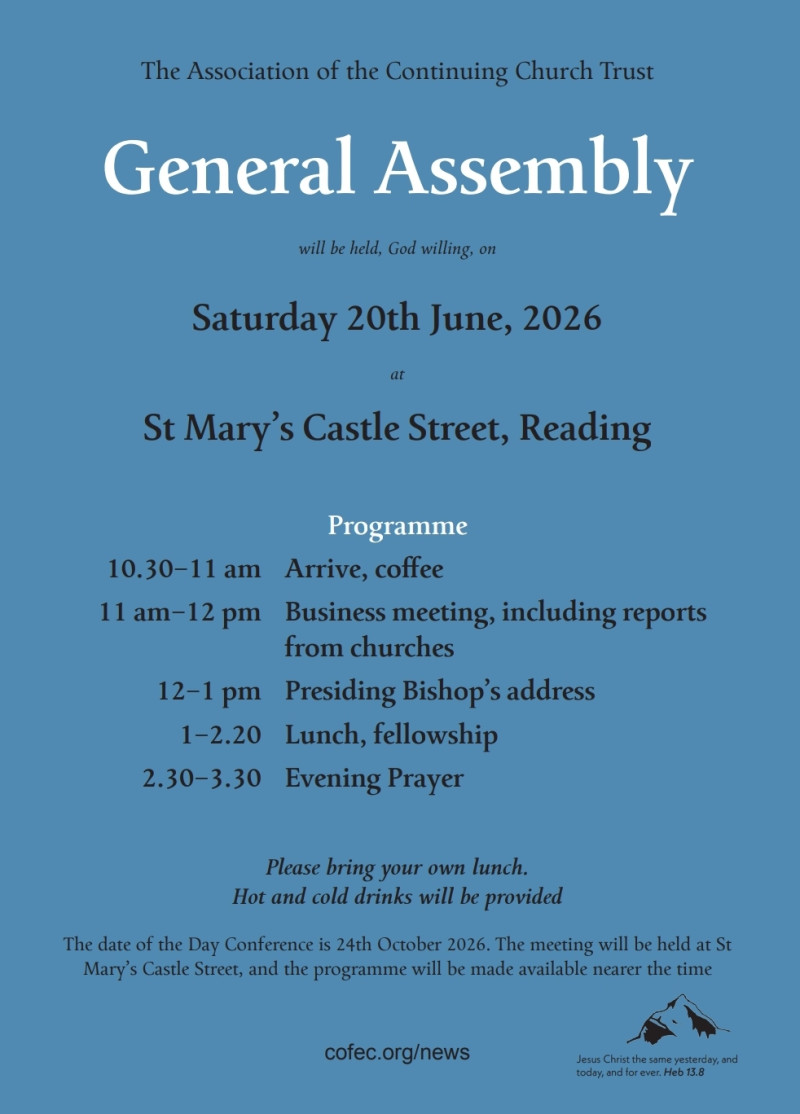
The Association of the Continuing Church Trust

The Church of England (Continuing) Statement on the King’s Christmas Day Speech 2025.

EVEN FEWER GOSPEL GROUNDS TODAY FOR RAPPROCHEMENT BETWEEN THE BRITISH MONARCH AND THE POPE OF ROME THAN AT THE PROTESTANT REFORMATION

THE CHURCH OF ENGLAND CONTINUES HER DEPARTURE FROM SCRIPTURE BY APPOINTING A USURPER AT THE TOP.
THE CHURCH OF ENGLAND (CONTINUING)